
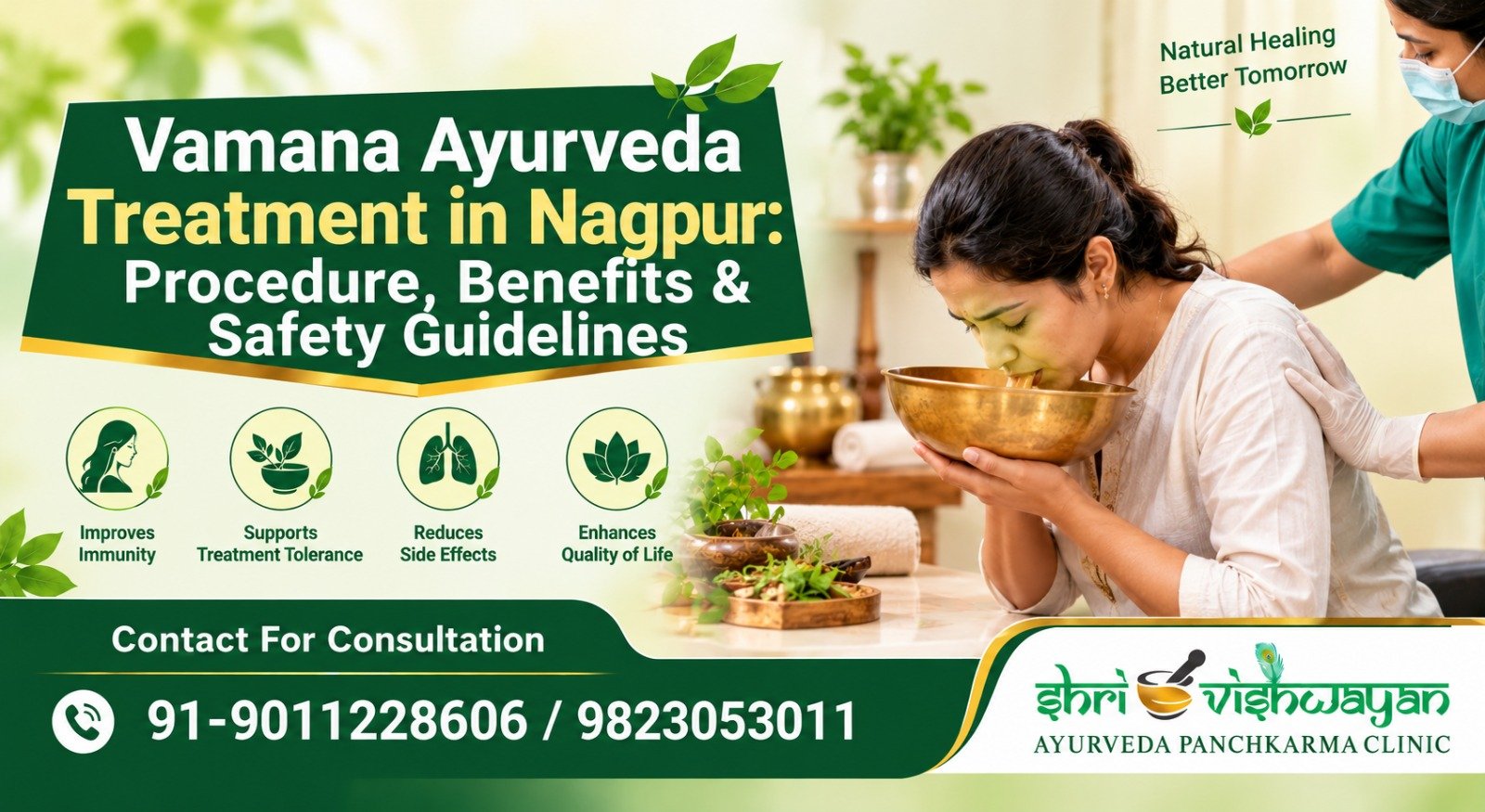
If you have been dealing with stubborn cold, recurring skin problems, or a heavy, sluggish body that no medicine seems to fix, an Ayurvedic doctor may suggest Vamana. It is one of the five main cleansing therapies of Panchakarma, and it is gaining attention among people looking for Ayurveda treatment in Nagpur.
Let’s go through what it actually involves, what it can do, and what you should know before you book a session.
What Is Vamana Therapy?
Vamana is a medically supervised therapeutic emesis. In simple words, the body is guided to bring up excess Kapha dosha through controlled vomiting. Ayurveda describes Kapha as the energy linked with moisture, mucus, and heaviness. When it builds up, it can show up as congestion, weight gain, skin issues, or low energy.
Vamana is not a casual detox you try at home. It is a structured therapy that needs a qualified Ayurvedic physician, which is why many patients in Nagpur prefer an established Panchakarma centre over experimenting on their own.
Who Can Benefit From Vamana?
Doctors usually recommend Vamana for Kapha-dominant conditions. These may include:
- Chronic cold, sinus problems, and allergic rhinitis
- Bronchial asthma and recurring cough
- Psoriasis, eczema, and other stubborn skin conditions
- Obesity and sluggish metabolism
- Certain digestive complaints
- Diabetes-related Kapha imbalance (under strict supervision)
The treatment is also done seasonally by some people, especially in spring, when Kapha naturally rises.
The Vamana Procedure, Step by Step
Vamana is never one single day of treatment. It follows three stages.
1. Purvakarma (Preparation)
This stage usually lasts 3 to 7 days. You are given medicated ghee to drink in increasing doses, a process called Snehapana. This loosens toxins in the body. After that, you receive oil massage (Abhyanga) and herbal steam (Swedana) so the toxins move toward the digestive tract. You are also asked to eat light, easily digestible food.
2. Pradhana Karma (Main Therapy)
On the day of Vamana, you are given a Kapha-increasing meal the evening before or that morning. Then you drink a herbal preparation, often including ingredients like Madanaphala, Vacha, and licorice decoction. Vomiting follows in a few rounds. The doctor monitors your pulse, blood pressure, and the quantity and nature of what comes out to decide when the therapy is complete.
3. Paschat Karma (Post-Therapy Care)
This part is just as important as the vomiting itself. You are given a gentle diet, starting with thin rice gruel, then slowly moving to normal food over several days. Rest, warm water, and avoiding cold drinks, spicy food, and heavy exercise help the body settle.
Benefits of Vamana Treatment
People who undergo Vamana under proper guidance often report:
- Clearer breathing and relief from chest congestion
- Reduced frequency of cold and allergy flare-ups
- Improvement in skin conditions over time
- Better digestion and appetite
- A lighter body and improved energy
- Support in weight management when combined with diet and lifestyle changes
Results differ from person to person. Vamana works best when it is part of a larger plan that includes diet, sleep, and daily routine.
Who Should Avoid Vamana?
This is where many blogs stay silent, but it matters. Vamana is not suitable for everyone. It is generally avoided in:
- Pregnant women
- Children and very elderly people
- People with heart disease, high blood pressure, or severe weakness
- Those with ulcers, bleeding disorders, or recent surgery
- Anyone who is extremely thin or malnourished
A proper consultation, including pulse examination and medical history, should always come before the therapy.
Safety Guidelines to Follow
- Choose a qualified doctor. Look for a registered BAMS or MD Ayurveda practitioner.
- Never self-administer. Emetic herbs in the wrong dose can cause dehydration or electrolyte imbalance.
- Follow the diet plan strictly. The post-therapy diet is part of the treatment.
- Tell your doctor about all medicines you take, especially for diabetes or blood pressure.
- Stop and report immediately if you feel extreme weakness, dizziness, or chest discomfort.
How to Choose a Panchakarma Centre in Nagpur
Nagpur has a growing number of Ayurvedic clinics and wellness centres, so it helps to be a little selective. Check whether the centre has:
- Qualified, registered Ayurvedic doctors
- A clean, dedicated Panchakarma therapy room
- A proper consultation before treatment
- Clear pricing and no unrealistic promises like “cure in one session”
- Follow-up support after the therapy
Visit the centre once, ask questions about the procedure, and trust your comfort level. A good doctor will never rush you.
Final Thoughts
Vamana is a time-tested part of Ayurveda, and when done correctly, it can bring real relief from Kapha-related problems. But it is a serious therapy, not a quick fix. If you are considering Vamana treatment in Nagpur, start with a consultation with a qualified Ayurvedic doctor who can tell you whether it suits your body and health condition.